Latest Posts

Serendipity Are Made of These

Intellectuals like to think one’s destiny is determined by one’s choices… this wannabe intellectual is feeling (at least for today), that perhaps one’s choices are governed and led inexorably by destiny…

Haec Dies:

1. A happy occasion where my old friend, seriously overachiever and talented NAFA classmate gets married! *congrats John!*

2. Two of my adult choirs pull off respectable public performances after having come a very loooong way:

2.1 The STAR Teachers’ Choir’s first public performance @ the Esplanade Library! The small chamber group of 13 (+1 conductor), completely self-led, made up of music teachers in-training and full-fledged music teachers. Do note though that many of them are learning singing for the first time, let alone conducting, leading warmups and organising themselves as a choir etc. I must say for such a group to sing music with 4-part divisi like today is not a walk in the woods!! GREAT JOB and kudos to the two conductors Rebecca Lau (Mayflower Primary School) and Allen Losey (Tampines Primary School)!!! *muacks*

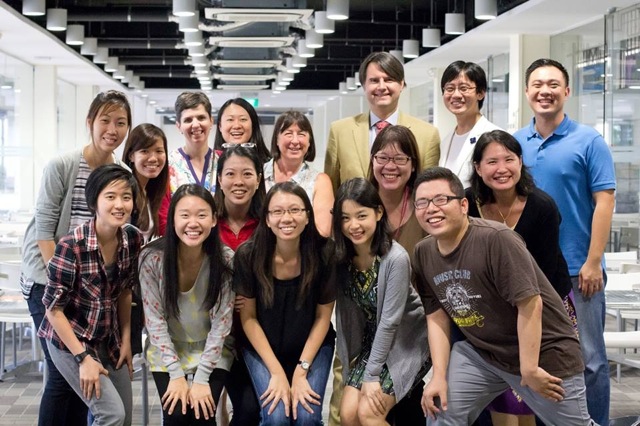
Above: The lovely, crazy teachers from STAR Teachers’ Choir!

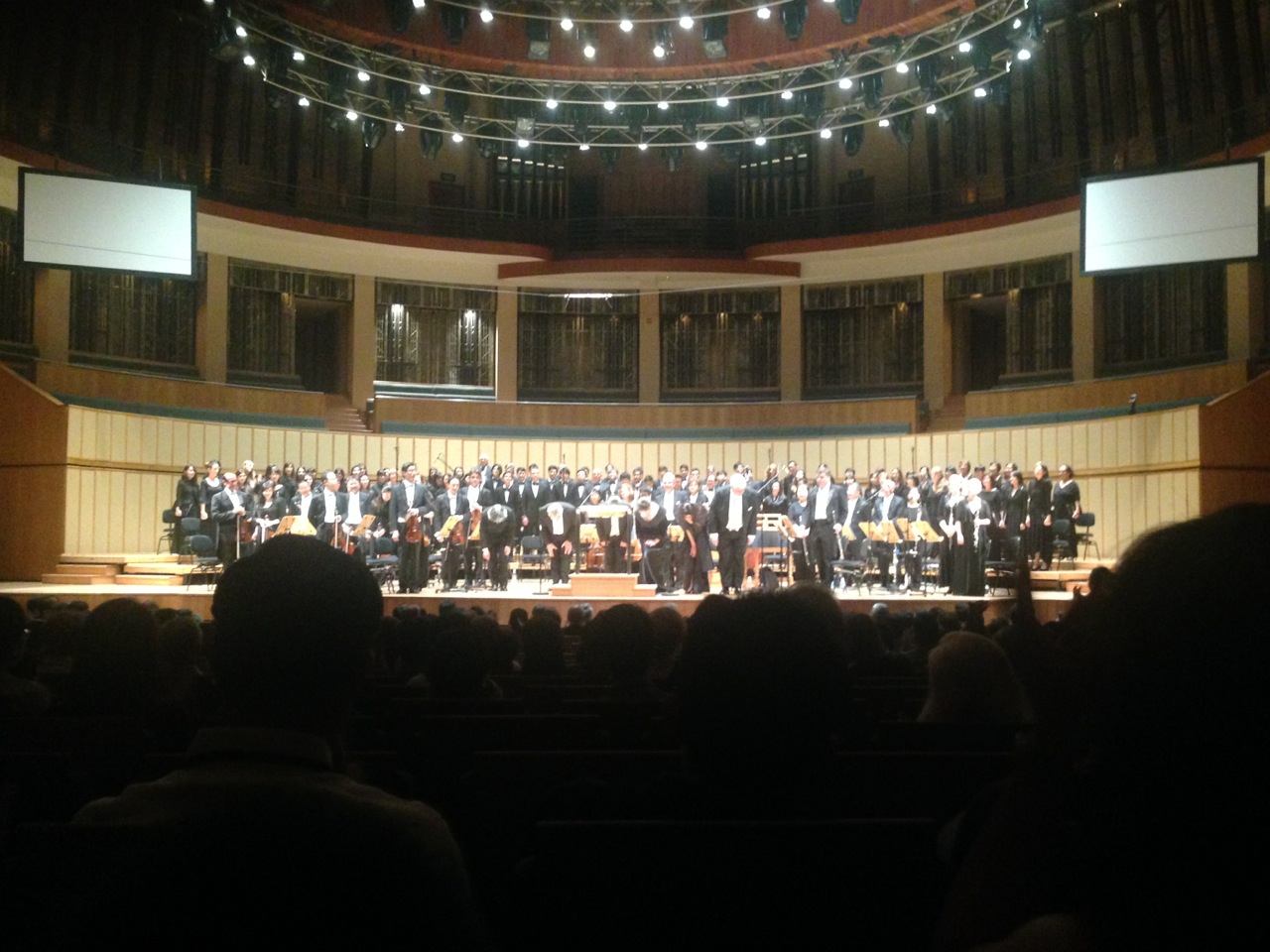
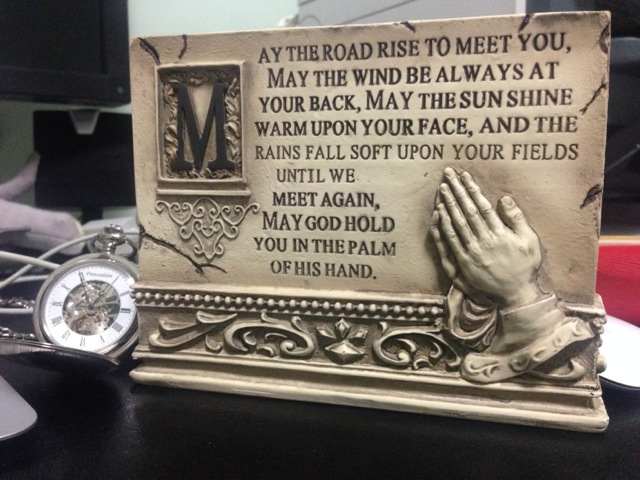
2.2 The International Festival Chorus (Singapore) celebrates its 40th Anniversary as a choir (yes, it was formed in 1974) for which I had the privilege of directing over the last 5-6 years where we nursed a thirst for exploration of ALL sorts of music – ranging from choral-orchestral works of all sizes as well as a cappella gems, from classical repertoire to pop, jazz & broadway to folksongs etc.… and tonight, IFC pulled off what is perhaps their best performance thus far, a Gesamntkunstwerk weaving in a jolly good script by veteran artist and educator Mary Ann Tear, brought to life by talented (AND good-looking) young actors Mattheus and Valerie Choo from Lasalle College of the Arts. The recently chosen ‘Irish Blessing’ meant for members who are leaving ironically became something quite apt for my departure… my swan song with IFC cannot possibly be sweeter!

Above: Moi & Mary Ann Tear.

Below: Just a small sampling of what came in the box… as much of the cheese, chocolates, red wine etc.etc.etc. MUST go into the fridge ASAP so didn’t take pictures of it all.

Above: The many beautiful people I’ve met, as well as parting presents and blessings from IFC… I’ve never received greetings in THIS many languages before… I didn’t have time to say it individually to everyone, but THANK YOU ALL!

3. Then I come home post-performance and chance upon Singapore Symphony Orchestra’s Mahler Symphony of a 1000 on TV… Yes I sang in THE Mahler 8 (eat your heart out people…) with the Singapore Symphony Chorus as a young voice major from 10 years ago!!

http://youtu.be/3hszVmhCOP8

It was this faithful performance that made me yearn for the secret arts of composing and conducting orchestral works in the first place, not to mention setting up a chorus (IFC!) that could do symphonic works. What a wonderful, happy reminder on why I did what I did!

All things come full circle indeed… Serendipity are made of these!

A Passionate Passion: A review of Bach’s St John Passion conducted by Lim Yau

GALA: BACH: ST JOHN PASSION
4 April 2014 (Fri)
Esplanade Concert Hall
Performing Home of the SSO

LIM YAU conductor
STEVE DAVISLIM tenor (Evangelist & arias)
MARTIN SNELL baritone (Pilate & arias)
JAN-HENDRIK ROOTERING bass-baritone (Christus)
NADINE LEHNER soprano (Maid)
LUCIA CERVONI mezzo-soprano
REGINALD MATTHIAS JALLEH* tenor (Servant)
TEO ENG SIANG# bass (Peter)

SINGAPORE SYMPHONY CHORUS
HALLELUJA CHORUS
NAFA CHAMBER CHOIR

*member of NAFA Chamber Choir
#member of Singapore Symphony Chorus

JOHANN SEBASTIAN BACH
St John Passion, BWV.245 2hrs

It has been several years since I last attended a ‘Historically Informed Performance’ (HIP) in Singapore and I was intrigued to see a chamber-sized string orchestra with theorbo (belonging to the lute family), viola da gambas (modern cello’s ancestor), organ and harpsichord with a near 100-strong chorus onstage during the recent Gala St John Passion Concert conducted by Lim Yau.

I am sure somewhere, some (stuffy old) musicologist-purist, while acknowledging stylistically performed ornaments and melodic embellishments might have scoffed at this recent rendition of J.S. Bach’s St John Passion! Indeed, Bach had to score for smaller musical forces due to the small size of the Thomaskirche (Thomas Church)… or that a ‘proper’ HIP should have gone all the way with an ensemble made up of entirely period instruments (scholarly researched, reconstructed instruments of the past, with curved bows and viols, transverse flutes) or usage of Baroque tuning etc.etc.etc.

Frankly, who cares?

There was clear musical foreground and well-maintained balance between voices throughout, extending not just to chorus-orchestral relationships but also within chorus parts itself – obvious care was taken in bringing out the inner workings of Bach’s counterpoint, with alto and tenor lines given due respect when interesting music material was to be found in the chorales. Likewise, fugal subjects and answers were always given its proper prominence before retreating into countersubjects in No. 21 “Wir haben ein Gesetz” (We have a law).

At all times, the story-telling (in German) of the Passion of Christ was communicated with the clearest of diction from the well-prepared chorus and aided by a light, transparent clarity of playing from the orchestra – kudos to a disciplined orchestra willing to play closer to the fingerboard under Lim’s masterful direction. The chorus was top-notch, with excellent vocal production and diction, clean entries and musically well-prepared for even the most sudden of entrances of Kreuziges (crucify!) after long recitatives and arias, sounding as a single unit despite being around 100-strong. Surtitles were timely and helped non-native German speakers.

Lim’s uncanny ability in drawing out a rainbow of tone colours made every second of the nearly 2-hour concert interesting. The theorbo and viola da gamba brought a great deal of charm to the performance and shone especially in the recitatives and solo arias… perhaps a worthy and forgivable trade-off for the occasional incidents of intonation lapses in the viola da gamba during orchestral tutti. Period instruments while being in possession of rather charming tone colours do unfortunately suffer from chronic intonation or projection problems that was fixed with technological advancements leading to modern day instruments. Kudos especially to the viola da gamba musicians if they were having to relearn how to play at short notice, or specially for this concert.

The demanding role of the Evangelist was sung by Steve Davislim who was visibly engaging the audience in the storytelling. He is in possession of a beautiful tone that was slightly stretched in the higher tessitura though one can imagine his voice to be flawless in a lowered Baroque tuning. Although all of the soloists were musically reliable, it was Baritone Martin Snell who as Pilate, was vocally and musically the most attractive, with the “Betrachte meine seele” being the highlight of the evening’s solos. Kudos to the beautiful two solo violin and viola da gamba that accompanied him in this aria. Another musical gem was the dramatic silence after “und neiget das Haupt und verschied” (And he bowed his head and gave up the Spirit). Lim demonstrates a clear understanding of this emotional text, showing off Bach’s oratorio with an almost operatic flourish.

The concert though was not without some curious musical moments. Shane Thio was at his usual best and alternates between the organ and harpsichord effectively, although I am personally curious as to the musical/scholarly reasons behind such alternation of keyboard in the music. The chorus was also made to sing a cappella (unaccompanied) in No. 11 “Wer hat dich so geschlagen” (Who has struck you so) on the repeat (either that or the orchestra was so muted as to be inaudible). Perhaps such mysteries can only be solved by asking the conductor himself.

If we accept the philosophy that music of yesteryears should continue to ‘speak’ to the people of today, then Maestro Lim Yau has certainly gotten the right balance between doing just that and providing a scholarly offering that is HIP… the proportion of choristers-orchestral musicians employed was certainly ‘correct’ and the augmented numbers, justified, for the massive 1800-capacity Esplanade Concert Hall that was mostly full.

In a time of commercialism where the title of ‘maestro’ is thrown around cheaply, I am very happy to say we have the real deal right here, a Singaporean befitting of the title, bringing to life Bach’s magnum opus and inspiring young children and musicians in the audience (and chorus) who stayed rapt in attention to the 2 hours of passionate music-making! Special kudos to Maestro Lim Yau and the outstanding ensemble of musicians from the SSO and combined chorus!

Composer-conductor Albert Tay spent over a week studying, rehearsing and conducting the Johannespassion under the tutelage of Maestro Helmut Rilling at a Bach Masterclass-Festival some years ago. He has never had the desire to write reviews on his blog but was sufficiently inspired to do so in the hope that more fellow Singaporeans will hear of how we have world-class musicians doing top-notch work and are just as worthy of one’s ticket money and time as any other famous orchestra or maestri that are brought in from elsewhere.

Gazing into the Crystal Ball for Singapore’s Music Education

I was recently invited to be one of the workshop panelists at a recent weeklong 2013 Kodály Course organised by Singapore Teachers’ Academy for the aRts (STAR). A ‘music commando’ team of clinicians gathered here, comprising of the Principal of the Kodály institute (KI), Dr. László Nemes, KI lecturer Szirányi Borbála (fondly known as ‘Bori’) as well as Lucinda Geoghegan who works with the Royal College of Scotland & the National Youth Choir of Scotland (NYCoS). Sheryl Sim, in her dual capacity as a fellow alumnus of KI and STAR staff was also on the panel as one of two Singaporeans offering training & local perspectives.

In the course of the week, common singing (mass singing in the mornings and evenings), methodology (the science & art of teaching), musicianship (building of personal musical skills), singing games for children (experiencing and designing music games) were delivered by the panel. From the simplest activities to the most complex and demanding of tasks, careful preparation, sophisticated ideas and pedagogy underpins all these activities ensuring progress at all times. What we saw were essentially quantum leaps in musical skill and pedagogy given the short span of time.

Excellent programme and delivery aside, it was really exciting to see 80 over public school music teachers participating enthusiastically and actively in demanding music tasks (some of which are probably completely new to them). Such ‘gungho’ courage and willingness to try something new & unfamiliar was totally refreshing in view of the generic ‘shy Singaporean’ culture. I met many bright music teachers who were open-minded, eager to learn, hungry for knowledge, repertoire and ideas for their music classroom & personal growth. These teachers were collaborating, openly sharing ideas, knowledge, assimilating and synthesising new knowledge (e.g. working together to come up with new music games for themselves), sharing resources etc…. such wonderful spirit of altruism and collaboration is something that practitioners working in school CCAs could well learn from instead of working in individual silos. Kudos to STAR and their topnotch staff for its vision, excellent logistics, and support for such a programme.

As an artist-educator involved in both the arts scene as well as the training of the local teaching fraternity, I can now gaze into the crystal ball for our musical future and boldly proclaim (especially to fellow artists who are/were depressed about our Arts scene/arts education) “lament no longer” for I have observed STAR teachers (pardon the pun) whom I would be very happy to have as my own children’s music teachers. It is a wonderful new milestone for the nation as well as for us young artist-educators to be teaching and learning alongside such international giants; I am positive and hopeful that the future of music and music education in SIngapore is very bright indeed! 🙂

Kodály Course participants with Bori, Lucinda, László and Albert (Sheryl was busy!).

1 November 2013@STAR. Photo courtesy of Zel.